Strategic systems and discovery research
We live inside systems too vast to see and too fast to read.
Pascal Wicht. Independent discovery researcher, working on large scale systems and the essential infrastructures societies run on.
01 — Field
Before the forecast, before the strategy
You have a mandate and the ground under it is moving. The reference points your organisation has always used no longer explain what is happening.
I work in the field, where maps describe land that has already moved. The questions that matter arrive early, while the situation is still forming and the frame is still open.
New questions come slowly in the tyranny of the quarter, where the present is loud enough to drown the future and the horizon ends at the next deadline. They come faster on the ground, from people already living inside the shift.
02 — Global Majority
Most of humanity builds, repairs and improvises the systems it depends on every day. Informal economies, extended families, community credit, transport networks that move more value than the banks that ignore them. These are working answers to conditions the rest of the world is only starting to face. Volatility, scarcity, broken trust in institutions, infrastructure that has to hold without a safety net.
Fieldwork there changes how you read anywhere. What looks like an edge case in Zurich is standard operating procedure in Makassar, and it usually arrives in Zurich about five years later. I bring that reading to European terrain as readily as to any other. The comparison is the value, whichever end you start from.
03 — Method
The people inside a problem speak their own language and tell their secrets slowly. You earn them. Warm data comes by consent and compounding care.
They sit at different layers, different angles and different stakes. You reach them where they stand and where they pass. Central bank governors and cash-in-transit crews. Regulators and market traders. Operators, drivers, shopkeepers, mothers holding three currencies at once.
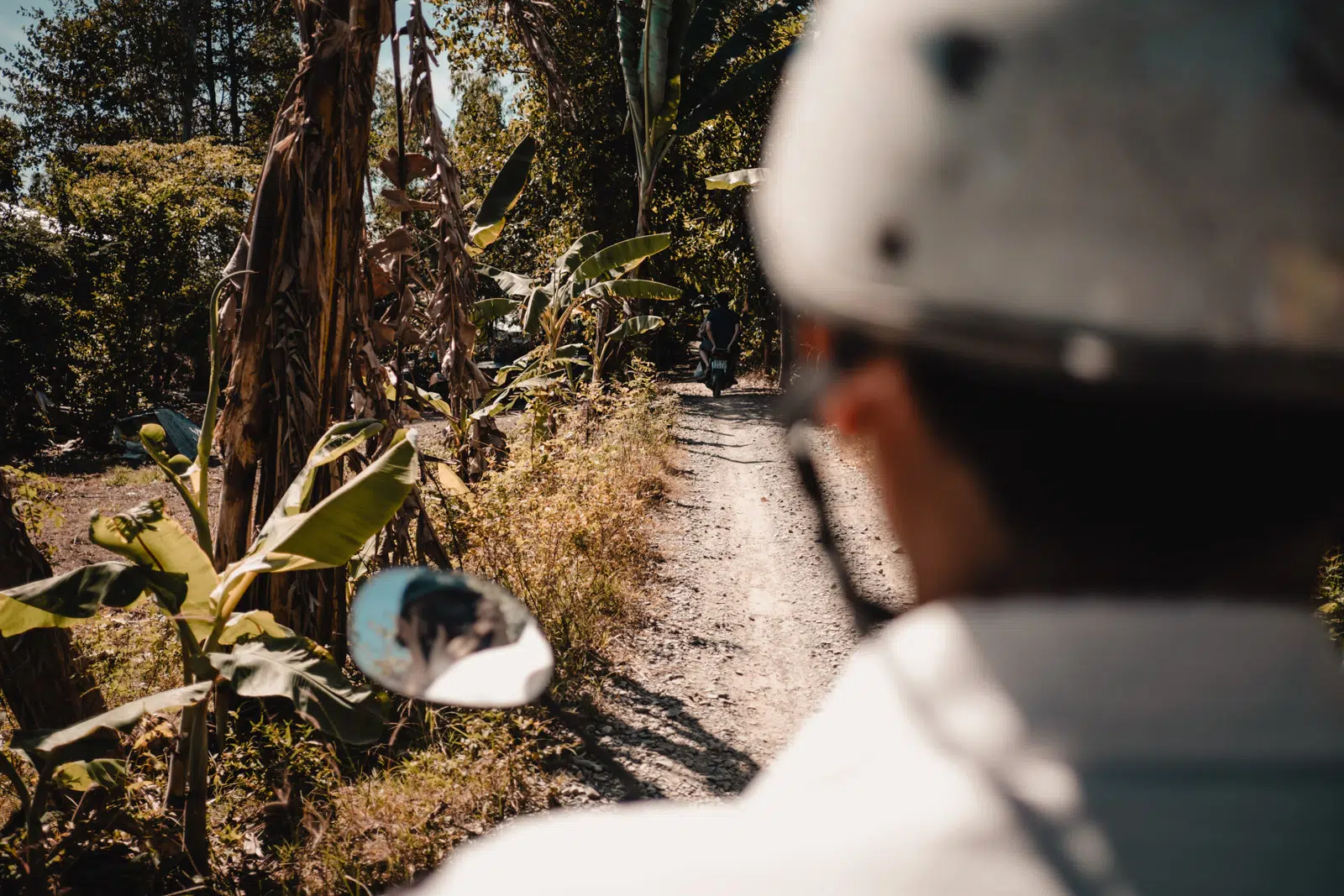
I go in and I stay. I walk into systems, drive through them, eat in them, sleep inside them, until the layers reveal their coordinates to whoever stays long enough to be trusted.
04 — Domains
Sovereignty sensitive, compliance heavy, mission critical. Money and payment infrastructure, identity, mobility, energy, the systems a society holds in common and cannot switch off. Complex domains with no control group and no second run.
This asks for a feel for scale and for patience that looks like waste right up until it pays.
05 — Return
The first three months produce orientation material you can take into a strategy conversation: what is shifting, what it means for you, and which questions are now the important ones. It stands on its own. You decide what happens next from something you can already read.
Longer programmes go deeper and cover more ground. Everything below comes out of the same fieldwork.
Field reports with primary evidence, coded and traceable to source.
Named concepts and frameworks your teams keep using long after the engagement closes.
Multi-country programmes with comparable structure across markets.
Foresight and scenario work grounded in field evidence.
Briefings, workshops and keynotes for boards and executive teams.
06 — Practice
Multi-country research programmes on the systems societies depend on, run for institutions, industry and public bodies. Long residencies inside organisations, and shorter engagements when the question is sharper.
The practice runs on curiosity, imagination and attention. Being present somewhere long enough to notice what nobody thought to mention.
The orientation comes from doughnut economics. There is a space between a strong social foundation and an ecological ceiling, and it is where human genius has room to work. The social foundation is built from universal public infrastructures: the systems everyone can reach, that hold under pressure, that a society keeps in common. Those are the systems I research.
Twenty years of practice. Teaching design led foresight and creative research at ECAL, previously at HEC Lausanne and IMD. Based in Vaud, Switzerland. Working globally.
07 — Invitation
Bring me the question you cannot answer from the office. I work with teams who already sense that the picture on their dashboard is thinner than the world it describes, and who want field evidence they can build on.
Tell me what you are trying to see. Let’s get in touch.
Otherwise, I sometimes publish field notes and working concepts on LinkedIn while the research runs. It’s a practical way to connect.
Some futures arrive quietly. Some futures don’t ask permission.

Whispers & Giants
Pascal Wicht